Applying for Disability Benefits in Illinois
Applying for disability benefits in Illinois should not feel like a losing battle, but for many people, that’s exactly what happens. The process involves strict rules, medical requirements, and deadlines, and even a small omission or mistake can delay processing or even result in a denial.
At Ankin Law, we help people apply for SSDI the right way from the beginning. From our Chicago office, we have spent decades guiding Illinois residents through SSDI and SSI applications. We make sure the evidence is complete, the forms are accurate, and the claim is positioned for approval.

“If you’re overwhelmed, exhausted, or flat-out fed up with applying for disability benefits, it’s time to call our SSDI lawyers.”
– SSDI Lawyer Howard Ankin
Call Ankin Law today at (872) 529-9377. We don’t get paid unless you win.
Understanding the Disability Benefits Application Process in Illinois
Applying for Social Security Disability Insurance (SSDI) or Supplemental Security Income (SSI) in Illinois requires more than just filling out forms. It requires strategy. It requires evidence. And it often requires the kind of legal pressure only an experienced disability lawyer can apply.
The Social Security Administration (SSA) evaluates every disability claim using strict rules. Miss a deadline, misunderstand a medical requirement, or fail to provide the right documentation, and your claim can land in the latest stack of denials. And in Illinois, the backlog of applications is no secret. Chicago residents alone often wait months just for decisions.
Did You Know?
People applying for disability benefits in Chicago typically wait 5 to 7 months for an initial decision.
What Makes Illinois Disability Claims So Challenging?
- High denial rates for first-time applicants
- Long decision wait times at Illinois SSA offices
- Complicated medical and vocational requirements
- Confusing documentation rules
- The need for extensive medical evidence and consistent treatment
- A multi-stage appeals system that overwhelms most applicants
Pro Tip
If you already applied for disability benefits and your application was denied, don’t give up.
- Roughly 62% of initial SSDI applications are denied.
- At the reconsideration level, approximately 85% of claims are denied.
- For those who continue to the ALJ hearing, about 51% finally get approved.
The truth? You can do everything right and still get denied. That’s why people with disabilities turn to Ankin Law to help them get approved. We know the system, we know the judges, and we know how to build winning claims from the ground up.
Call (872) 529-9377 for Ankin Law.
What You Must Prove to Win Disability Benefits in Illinois
The SSA doesn’t approve claims because someone is temporarily sick, injured, or unable to find work. They approve claims because the evidence meets their exact legal standards.
To win disability benefits, you have to prove, clearly and convincingly, that you cannot perform substantial gainful activity due to a medically determinable impairment expected to last at least 12 months or result in death.
That’s the bar. And the SSA doesn’t lower it for anyone.
Medical Evidence: Your Most Important Weapon
Medical records are the backbone of every disability case. The SSA doesn’t take your word for it. They want documentation, objective, consistent, detailed documentation. This includes:
- Diagnostic test results
- Imaging (MRI, CT, X-rays)
- Specialist evaluations
- Treatment history
- Medication lists
- Surgical reports
- Functional capacity assessments
If your medical records are sparse, inconsistent, or incomplete, your disability application may be dead on arrival, no matter how real your condition is.
Our team works directly with your doctors to gather the evidence needed to support your claim. We make sure the SSA sees the full picture, not the cherry-picked version that leads to denials.
Work History and Functional Limitations
After reviewing your medical records, the SSA analyzes whether your condition prevents you from performing your past work, or any other work in the national economy. This is where many claims fall apart.
To get approved for disability, you must show:
- You can’t perform your previous job
- You can’t transition into a lighter or alternative job
- Your condition prevents sustained employment
- Your limitations are ongoing and well-documented
This isn’t about whether a job exists in Chicago or even in Illinois. It’s about whether you could perform the job, theoretically, based on your limitations.
We push back hard when the SSA tries to claim you can work a job that you clearly cannot perform in the real world.
Call (872) 529-9377 now. The earlier we get involved, the stronger your claim becomes.
How to Apply for Disability Benefits in Illinois (Step-by-Step Guide)
Getting approved for disability benefits requires precision. Here’s how to get started, and how to give yourself the best chance of success.
Step 1: Determine Whether You’re Applying for SSDI or SSI
While both programs are federal, the eligibility rules differ.
| SSDI (Social Security Disability Insurance): | SSI (Supplemental Security Income): |
| • Requires past work credits | • Needs-based (for low-income individuals) |
| • Based on your work history and earnings | • No work history required |
| • Comes with Medicare eligibility | • Comes with Medicaid access |
| • Allows dependents to qualify for auxiliary benefits | • Strict financial rules apply |
Many Illinois residents qualify for both. We determine the fastest and most effective path for your situation.
Step 2: Gather Medical and Employment Records
Before you file for disability benefits, you should have the following:
- Updated medical records
- List of doctors, clinics, and specialists
- Medication lists
- Hospitalizations
- Work history for the past 15 years
- Personal documentation (ID, SSN, proof of income, etc.)
When records are missing, unclear, or outdated, we step in to fix the problem before the SSA uses it as a reason to deny you.
Common Reasons Disability Claims Are Denied in Illinois
Illinois residents face the same challenges as disability applicants across the country, but the state’s high denial rates, overloaded SSA offices, and long appeals timeline make every misstep more painful. Most people find out just how unforgiving the Social Security Administration truly is when their first denial letter lands in their mailbox. By then, the damage is done, and the wait to fix it begins.
Understanding why disability claims are denied is the first step to avoiding these costly mistakes.
The Most Frequent Reasons Disability Applications Get Denied
Reasons for benefit denial varies on a case by case basis, however, some of the most common reasons for denial are:
Lack of medical evidence
The SSA doesn’t approve claims based on symptoms alone. If your medical records don’t show objective proof of your condition, the SSA will likely deny your application.
Failure to follow prescribed treatment
If you miss appointments, stop treatment, or disregard medical instructions, even for valid reasons, the SSA may assume your condition isn’t as severe as you claim.
Earned too much income while applying
Work activity over the Substantial Gainful Activity (SGA) limit is one of the quickest ways to get rejected in Illinois.
Claiming non-severe conditions
The SSA only approves impairments that significantly limit your ability to perform work activities. Minor or temporary conditions won’t make the cut.
SSA determining the applicant can still perform some type of work
Even if you can’t return to your old job, the SSA may argue you can perform a “lighter” job, often an unrealistic assessment.
Incomplete forms
Missing information, blank sections, or incomplete work history can derail a claim instantly.
Missed deadlines
Illinois claimants lose their right to appeal every day by missing strict SSA deadlines.
Inconsistent statements in medical records
If your doctor’s notes don’t match your reported symptoms or limitations, the SSA may assume you are exaggerating.
At Ankin Law, we anticipate obstacles, counter SSA tactics, and build claims designed to withstand denials before they ever happen.
What Happens If Your Disability Claim Gets Denied?
If your claim was denied, don’t panic. Most disability cases that win do so during the appeals process, not during the initial application. In Illinois, appealing a denial is practically a rite of passage. The SSA rejects the majority of first-time claims, forcing applicants into a multistep appeals system that can feel slow, intimidating, and deliberately confusing.
Illinois disability appeals progress through four main stages:
- Federal Court
- Request for Reconsideration
- Administrative Law Judge (ALJ) Hearing
- Appeals Council Review
While every stage presents challenges, each stage also offers opportunities, especially with experienced legal representation.
At Ankin Law, this is where we do some of our strongest work. We know the Illinois SSA offices, the Chicago-area judges, the local procedures, and the exact evidence needed to turn a denial into an approval.
Reconsideration Stage
When the SSA denies your initial claim, the first step is to request reconsideration. This is your earliest opportunity to:
- Fix errors in your initial paperwork
- Update medical records
- Add new diagnoses or worsening symptoms
- Submit stronger, clearer evidence
- Correct misunderstandings made by SSA reviewers
But here’s the truth: Illinois reconsideration decisions are often just rubber-stamped denials. The same office that rejected your initial claim takes another look, and many times, they simply repeat their earlier decision.
That’s why strategy matters.
At Ankin Law, we don’t treat reconsideration like a formality. We treat it like the foundation for the hearing stage. We eliminate weaknesses early, build the record, and prepare your case as if the judge will examine every detail. By the time your claim reaches the hearing, the groundwork is already in place.
Administrative Law Judge Hearing Stage
This is the turning point. The Administrative Law Judge hearing is where most Illinois applicants who ultimately win benefits secure their victory. But success requires preparation, legal skill, and a deep understanding of SSA regulations.
At your ALJ hearing, we:
- Represent you from start to finish
- Cross-examine vocational experts who often testify against claimants
- Challenge improper or incomplete SSA assessments
- Present powerful medical evidence from your doctors
- Prepare you thoroughly so your testimony is clear, credible, and compelling
Most importantly, we know the Chicago judges. We know how they evaluate cases, what evidence they prioritize, and how to counter the vocational experts they rely on.
“Too many Illinois claimants walk into hearings alone and lose, not because they aren’t disabled, but because they aren’t prepared for the SSA’s tactics.”
– Attorney Howard Ankin

Why Choose Ankin Law When Applying for Disability Benefits in Illinois
When applying for disability benefits, experience matters. Ankin Law is a Chicago-based law firm with decades of experience representing individuals in high-stakes legal matters, including Social Security disability claims. We understand how the SSA evaluates applications, where claims often break down, and how to present evidence clearly and effectively from the start.
What Sets Ankin Law Apart?
- Decades of disability law experience
- Deep knowledge of Illinois SSA offices
- High-volume case success
- Professional and personalized representation
- Full support from application through appeals
- No fee unless you win
Local. Experienced. Relentless.
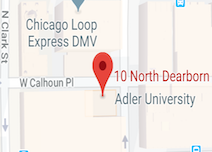
We’re not a national call center. From our Loop office to our frontline presence at Illinois SSA hearings, we’re exactly where you need us, right here at home.
FAQs About Applying for Disability Benefits in Illinois
How long does it take to get disability benefits in Illinois?
Illinois applicants often wait several months for an initial decision. If the case moves to a hearing, it can take a year or longer. Working with an attorney helps reduce delays and strengthens your case at every step.
Can I apply for disability benefits in Illinois if I’m still working?
You can apply while working, but if you earn more than the SSA’s substantial gainful activity limit, your claim will likely be denied. We can evaluate your situation to help you avoid mistakes.
Do I really need a lawyer to apply for disability benefits in Illinois?
You’re not required to have a lawyer, but applicants with legal representation are significantly more likely to get approved. We handle paperwork, evidence collection, deadlines, hearings, and appeals so your case is strong from day one.